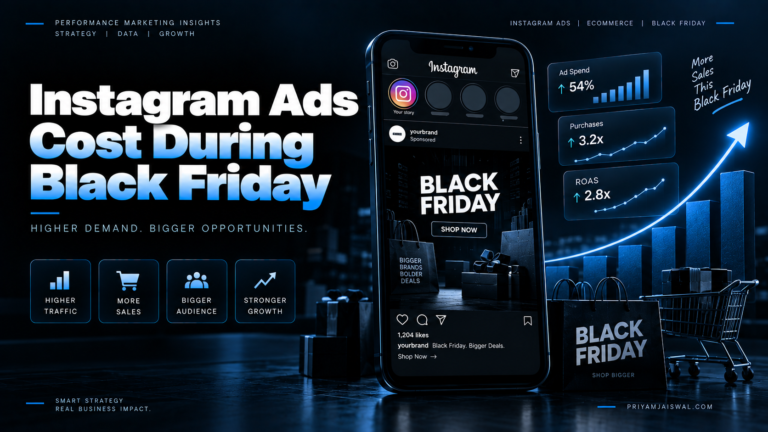
Every November, a lot of ad budgets die the same death. Someone launches the black friday sale campaign on the Monday before Thanksgiving, CPMs double overnight, the pixel is half broken, and by Cyber Monday the only thing that scaled was the invoice.
It doesn’t have to go that way. The brands that win this week usually did the boring work in September and October, and they understood one big shift: in 2026, you don’t really target Black Friday ads with audience checkboxes anymore. You target them with creative, clean data and timing.
This playbook walks through exactly how that works on Meta, Google and TikTok, with specific notes for advertisers selling into the US, UK and Canada.
The short answer: how do you target Black Friday ads in 2026?
To target Black Friday ads in 2026, use broad audiences and let each platform’s AI find buyers based on your creative. Feed it 10 to 20 genuinely different ads, fix your conversion tracking before November, warm up audiences in October, and save your biggest budget push for the Black Friday to Cyber Monday window.
That’s the whole thing in one paragraph. The rest of this guide is the how.
Why the stakes are higher this year
Shoppers aren’t slowing down. US consumers spent a record $11.8 billion online on Black Friday 2025, up 9.1% year over year, and $44.2 billion across the five days of Cyber Week (Adobe). Black Friday growth has now beaten Cyber Monday growth two years running, because people are chasing deals earlier.
There’s also a new player in the funnel. AI-driven traffic to US retail sites jumped 805% on Black Friday 2025 compared with the year before Shoppers are asking chatbots what to buy, then clicking through. Your ads and your product pages both need to answer questions clearly.
Black Friday 2026 lands on November 27. Cyber Monday follows on November 30. Put those dates on the wall now.
What actually changed about Black Friday ad targeting
A few years ago, a good media buyer’s edge was audience building. Stacked interests, a 1% lookalike of purchasers, some clever exclusions. That edge is mostly gone.
Meta, Google and TikTok now run automated campaign types (Advantage+, Performance Max and Smart+) that decide who sees your ads. What they need from you is different:
- Creative variety, because the algorithm reads your ad to figure out who it’s for
- Clean conversion data, because that’s how it learns who actually buys
- Enough runway, because a campaign launched on Black Friday morning has no time to learn
The catch is cost. During Black Friday week, peak Meta CPMs can run 50% to 80% above your Q3 baseline (Scigrowth). On Google, a recap of nearly 2,000 European ecommerce accounts found Black Friday 2025 spend up 31% and cost per click up 24%, while average order value fell 6.6% (Giovanni Perilli, citing smec). More money chasing smaller baskets. Fun.
So the goal isn’t to spend more in November. It’s to spend smarter before it.
Your Black Friday 2026 ad timeline
| When | What to do |
|---|---|
| Now to mid-October | Audit tracking, build creative library, test offers at normal CPMs |
| October | Run warm-up content, grow email and SMS lists, build engaged audiences |
| November 1 to 20 | Launch early-access offers, keep testing creative weekly |
| November 20 to 26 | Shift budget to retargeting and warm audiences, prep final creative |
| November 27 (Black Friday) | Full push on proven ads and offers |
| November 28 to 30 | Keep momentum through the weekend and Cyber Monday |
| December 1 to 26 | Extend to shipping-deadline and Boxing Day offers (UK and Canada) |
If you’re reading this in late September, you’re right on time. If it’s already November, skip to the tracking checklist further down and fix that first.
How to target Black Friday ads on Meta (Facebook and Instagram)
Meta is still where most Black Friday budgets go. Among brands tracked by Triple Whale, Meta took 67.6% of BFCM 2025 ad spend and delivered a 2.26 ROAS, though CPMs rose about 7.8% to $22.26 (Triple Whale).
The big story on Meta is Andromeda, its ad retrieval system. In plain English, Meta now looks at your creative to decide who should see it. Your ad is your targeting.
Let creative do the targeting
Here’s the part most people miss. Andromeda treats near-identical ads as basically one ad, so 15 polished versions of the same concept get one shot at an audience, while 5 rough but different concepts get five (Confect). Changing the button color isn’t a new ad.
What counts as “different”? Think in angles, not edits:
- A founder talking to camera about why the deal exists
- A customer unboxing video
- A “3 gift ideas under $50” carousel
- A price-comparison static for bargain hunters
- A problem and solution demo
Each one speaks to a different kind of buyer, so Meta can route it to a different crowd. Brands testing 20 or more new ads a month see 65% higher ROAS than those testing under 10, according to Scaledon data cited by Segwise.
Keep the structure simple
Fewer campaigns, fewer ad sets, more ads. A setup that works for most ecommerce brands:
- One Advantage+ sales campaign for prospecting, with broad targeting
- One retargeting campaign for site visitors, cart abandoners and engaged viewers
- One small testing campaign to find next week’s winners
Match format to funnel stage. Short UGC-style video (15 to 30 seconds) tends to win with cold audiences, carousels help people compare, and simple statics work well for retargeting (The Interconnections). Build everything vertical (9:16) first.
Two 2026 settings to check
Since February 2026, new Sales campaigns launch with every Advantage+ Creative enhancement switched on by default (AdMove). Review them before launch. Auto-generated text on a discount ad can get weird fast.
Meta also now requires disclosure on ads that contain AI-generated or AI-edited content. If your team is using AI tools to crank out Black Friday variations, label them properly.
How to target Black Friday ads on Google
If Meta creates the desire, Google catches it. People who type “black friday sale on air fryers” already know what they want. Your job is to be there, priced right, when they search.
Google took 22.65% of BFCM 2025 ad spend among Triple Whale brands, and CPMs climbed 10.57% to $20.58 (Triple Whale). Pricier, yes. But the people you reach are closer to buying.
Search and Shopping: own the intent
- Add “black friday” versions of your best product and category keywords now, so they build history before the rush
- Put the offer in the headline. “40% Off Everything, Ends Monday” beats clever wordplay every time
- Keep your Merchant Center feed spotless, with sale prices and promotions set up well ahead of time
- Bid on your own brand terms. Competitors will be bidding on them too
Performance Max: more control than you think
Performance Max used to feel like a black box. The 2026 version is more open, with negative keyword support and reporting that shows spend by channel, such as Search, Shopping and YouTube (Benly). Use that report. If most of your “Black Friday” budget is quietly flowing into Display, you want to know on day one, not day five.
Google also added text guidelines that let you block specific words or messaging in AI-generated assets. Handy if you don’t want the system inventing a discount you’re not offering.
Use Promotion Mode for the peak
This one is new. Google announced Promotion Mode in June 2026 as a beta for Search and Performance Max. It lets you schedule a short window where your ROAS target loosens and extra budget kicks in, then everything snaps back automatically when the window ends (Digital Applied).
For Black Friday, that means you can set November 27 to 30 as your push window in advance. No 11 p.m. panic about forgetting to reset budgets.
Demand Gen for the discovery side
Demand Gen runs on YouTube, Discover and Gmail, and it’s Google’s answer to social-style ads. It now includes shoppable ads on YouTube’s connected TV experience, and Google’s data shows campaigns that include TV screens pick up about 7% more conversions at the same ROI (groas). Families watch YouTube on the living room TV over Thanksgiving weekend. That’s a real opportunity. [INTERNAL LINK: Google Ads management service]
How to target Black Friday ads on TikTok
TikTok is no longer the “let’s test it with leftover budget” channel. Among Triple Whale brands, its share of BFCM ad spend grew nearly 24% in 2025, and it returned a 2.26 ROAS (Triple Whale). That’s level with Meta.
Smart+ for website sales
Smart+ is TikTok’s automated campaign type, similar in spirit to Advantage+ and Performance Max. Ahead of last holiday season, TikTok updated it so you can choose how much to automate across targeting, creative and budget, and it added its Symphony AI creative tools right inside (Influencer Marketing Hub).
My advice? Let it handle targeting, but keep a firm grip on creative. TikTok punishes anything that looks like an ad. The videos that work feel like a real person showing a real product, filmed on a phone, with the hook in the first two seconds.
GMV Max if you sell on TikTok Shop
If you run a TikTok Shop, GMV Max is now the default and only supported campaign type for Shop ads (TikTok Ads Help). You set a budget and an ROI target, and it pulls in your ads, organic posts and affiliate videos to push sales. TikTok says advertisers using GMV Max have seen up to 20% more incremental GMV (Ecomdy Media).
The practical takeaway: recruit affiliates and creators in October. On Black Friday, their videos become ammunition for GMV Max without extra production cost.
Spark Ads and creator content
Spark Ads let you boost a creator’s post from their own handle, which usually feels more trustworthy than a brand account. Just get usage rights in writing before you spend a cent. Chasing a creator for permission on November 26 is nobody’s idea of a good time. [INTERNAL LINK: TikTok ads service or UGC creative page]
Targeting the US, UK and Canada: what’s different?
Same day, three pretty different markets. If you sell across all three, don’t lump them into one campaign and hope for the best.
| Market | What to plan for |
|---|---|
| United States | Black Friday is tied to Thanksgiving, so the whole weekend is a shopping event. Four main time zones mean “midnight launch” needs a decision: Eastern or Pacific? |
| United Kingdom | No Thanksgiving, so the build-up feels shorter. Boxing Day (December 26) is a second peak. Strict cookie consent rules mean more conversions go unseen without proper consent setup |
| Canada | Canadian Thanksgiving is in October, so Black Friday stands alone. Price in CAD, check cross-border shipping times, and run French ads for Quebec shoppers. Boxing Day matters here too |
A simple rule: split campaigns by country when currency, shipping promises or language change. Everything else can often share a campaign.
The tracking checklist (do this before anything else)
None of the AI targeting above works if the data feeding it is wrong. Check these in October, not November:
- Meta Conversions API is live and deduplicating with the pixel
- Google Enhanced Conversions are switched on
- Google Consent Mode is set up, especially for UK traffic
- TikTok Events API is sending purchase events
- Purchase values pass the real order amount, in the right currency
- A test order shows up correctly on every platform
Finding a broken event on Black Friday means the algorithm spent your biggest week optimizing on bad data. That’s a painful way to learn. [INTERNAL LINK: conversion tracking audit]
How to manage budget during the black friday sale
A few rules that save money when things get hectic:
- Judge by blended numbers. Each platform takes credit for the same sale. Look at total revenue divided by total ad spend (often called MER) to see what’s really working
- Watch fatigue closely. One useful rule of thumb: flag any ad with frequency above 3.0 or a week-over-week click-through drop of more than 15% (Scigrowth)
- Protect your margin. A 50% discount plus peak CPMs can turn a “record” day into a loss. Know your break-even ROAS before you set targets
- Keep some powder dry. Hold back part of the budget to pour into whatever’s winning on Friday morning
Wrapping up
Want to target Black Friday ads well in 2026? Stop thinking about who to target and start thinking about what to show them. Build a deep bench of different creative. Fix your tracking. Warm up audiences while ads are still cheap. Then use each platform for what it’s best at: Meta and TikTok to spark interest, Google to catch people ready to buy.
The black friday sale window is short, loud and expensive. The brands that come out ahead are rarely the ones with the biggest budgets. They’re the ones who showed up prepared. Book Free Audit